a05.1
The Inner Space Reading
Four sessions over three to four weeks: I read your home alone, we talk away from it, we walk it together, and the result is presented. You leave with your Possible Inner Space: the ground a design can stand on.
EnquireLet's make a beautiful home.
Your home. With unusual character, and a style that lasts because it never followed a trend.
And do you know where we find it?
In your personality. And in the home you already live in.
With the Inner Space Method that becomes your concept. A home whose atmosphere matches who you are and strengthens you at your core.
» A home that feels like you.«
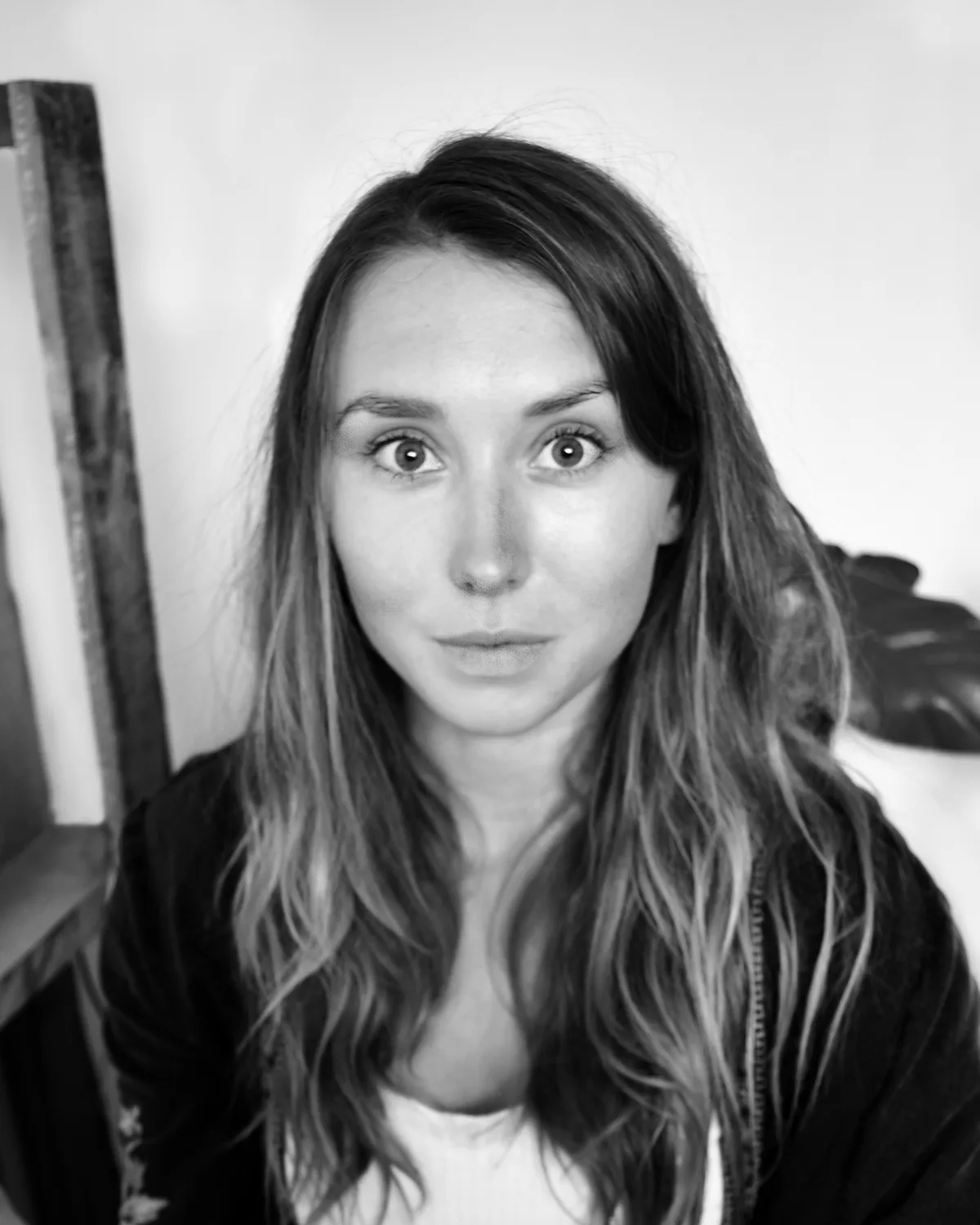
Trained in interior architecture, Lucy kept circling a question her drawings could not answer: what remains of a space, without place?
She came to the field by an unusual route. At eighteen she left for the other side of the world as an au pair, and arrived to a house whose atmosphere felt immediately alien. With nothing to go on but her own perception, she walked away: a small, formative act of reading a room. Soon after, she began studying interior architecture in Detmold, and there she found her world.
A bachelor from TH OWL with a thesis on birth spaces, years of project work in architecture offices in Australia, a restaurant of her own, two children, and then the master's project at the centre of it all: the essayistic book INNERER RAUM, written around the research question “What remains of space, without place?”
Out of that enquiry grew the Inner Space Method and this practice. Today Lucy works from the Northern Rivers of Australia, designing interiors that begin not with a trend but with the person who will live in them.
“I am your interior architecture psychologist. Your home is our means.”
That sounds like magic at first. It isn't. It's close attention and a clear method.
Inscribed in your existing home is who you have been and who you are. For a trained eye it is legible: the worn places, the favourite corners, the quiet patterns of how you actually move and rest. Left unread, that source stays mute.
When a new space is designed without reading the old one, those internalised patterns migrate unnoticed into the new design.
The Inner Space Method reads your existing living space as an expression of your inner space, and prepares the ground the later design will stand on. Five phases: from the visible room inward, and back out.
Enter the lived space alone, sight unseen, and read it with every sense: identity claims, traces of use, the room's quiet appeals.
»I let the space speak.«
Make meaning from what was seen: the recurring spatial patterns and the needs that speak through them.
»I bring the traces together.«
The person tells their own story, elsewhere. The inner space, the present self, becomes visible.
»I listen more than I speak.«
Walk the home together and weigh each pattern, keep, leave out, re-translate, add, until the Inner Yes is found.
»I recognise the Inner Yes when it becomes tangible.«
Condense it all into a threshold document: not a design, but the ground the design will stand on.
»I gather what has emerged.«
The Inner Space Principles accompany you through every phase of the method. 39 principles. 39 reminders. They sharpen your perception and lead you to the stance from which meaningful design emerges.
The cards follow the movement of the method. Everything above the horizon line is outside and visible: the lived space where everything begins. Everything beneath it lies hidden within. That is where the five phases lead you, deep into a person’s story. Draw a card.
The movement of the method
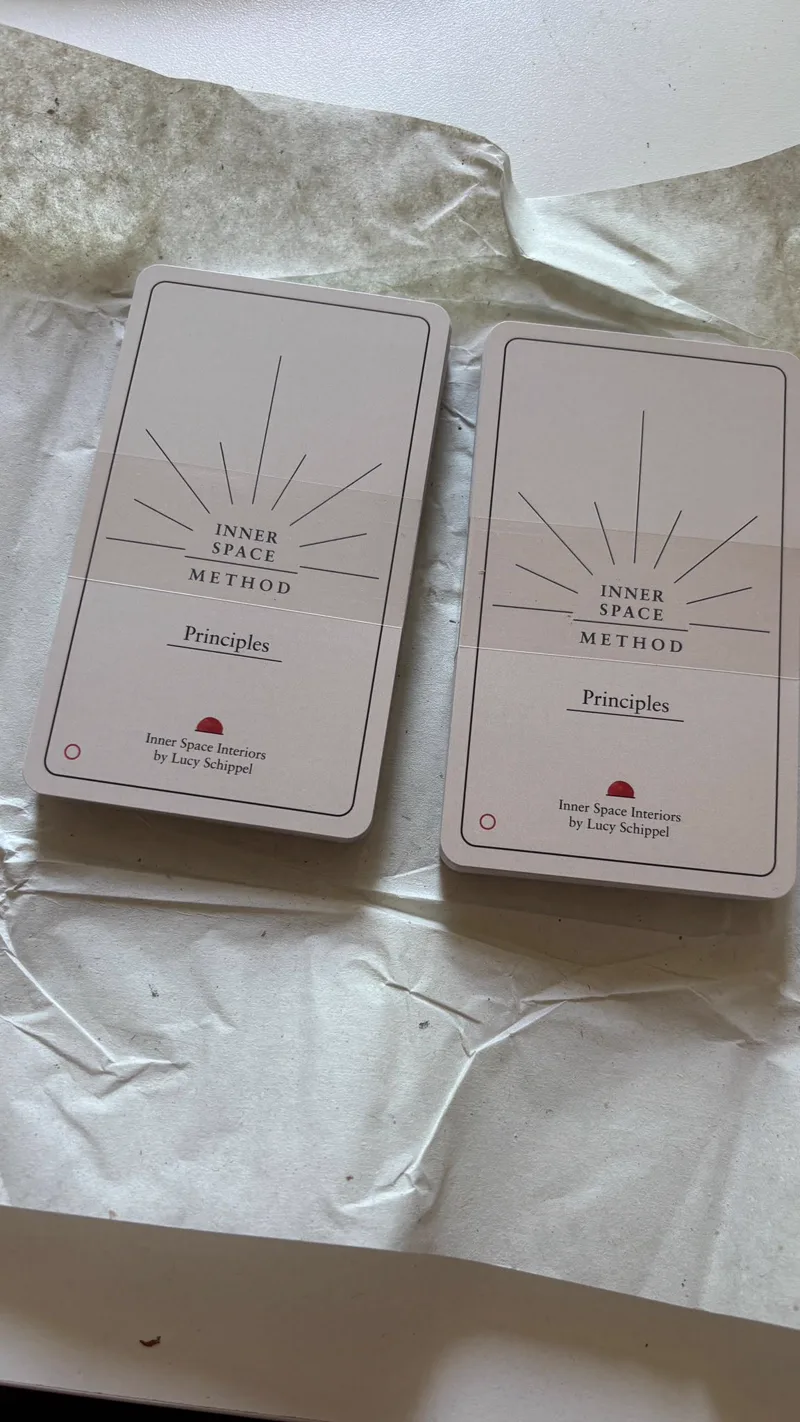 The printed set · DE / EN
 The bodily yes-moment in which your present self and your possible self resonate at once with something spatially concrete. It is the method's anchor, and its final test.
The Inner Yes shows itself the moment something truly reaches a person: something loosens, the breath widens, a bodily recognition arises. It emerges where a person recognises themselves in a spatial constellation. In that recognition, past, present and possibility connect, and a personal story becomes visible: memories, values and images of who this person is and who they want to be.
The Inner Yes is a constellation of as few elements as possible: distilled, not collected. Where a moodboard gathers, the Inner Yes reduces, to the handful of things your whole body affirms. Every later design decision is held against it.
“A home is not what looks right. It is what your body recognises as true.”
Four sessions over three to four weeks: I read your home alone, we talk away from it, we walk it together, and the result is presented. You leave with your Possible Inner Space: the ground a design can stand on.
EnquireThe design that follows the reading. With the Possible Inner Space as its foundation, your home is planned and realised to strengthen your identity, not to perform a trend.
Start a projectLearn the Inner Space Method through a structured online course: theory, a catalogue of questions, exercises and video insight into real application. Then apply it in your own practice.
See the course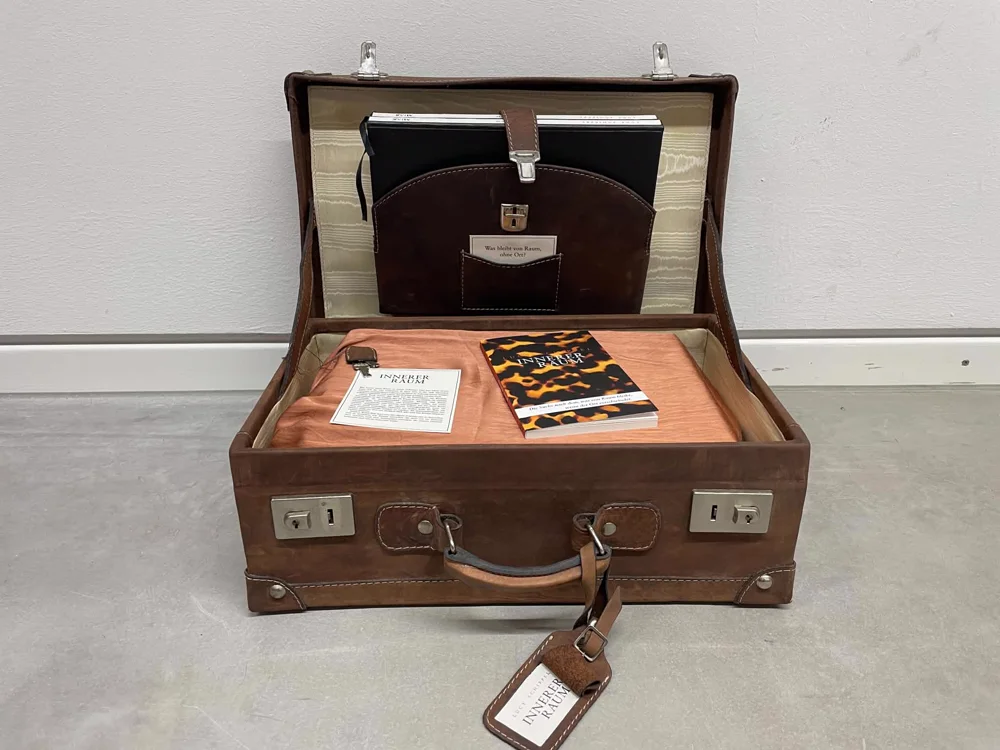 The book: INNERER RAUM Five phase workbooks »Was bleibt von Raum, ohne Ort?«
 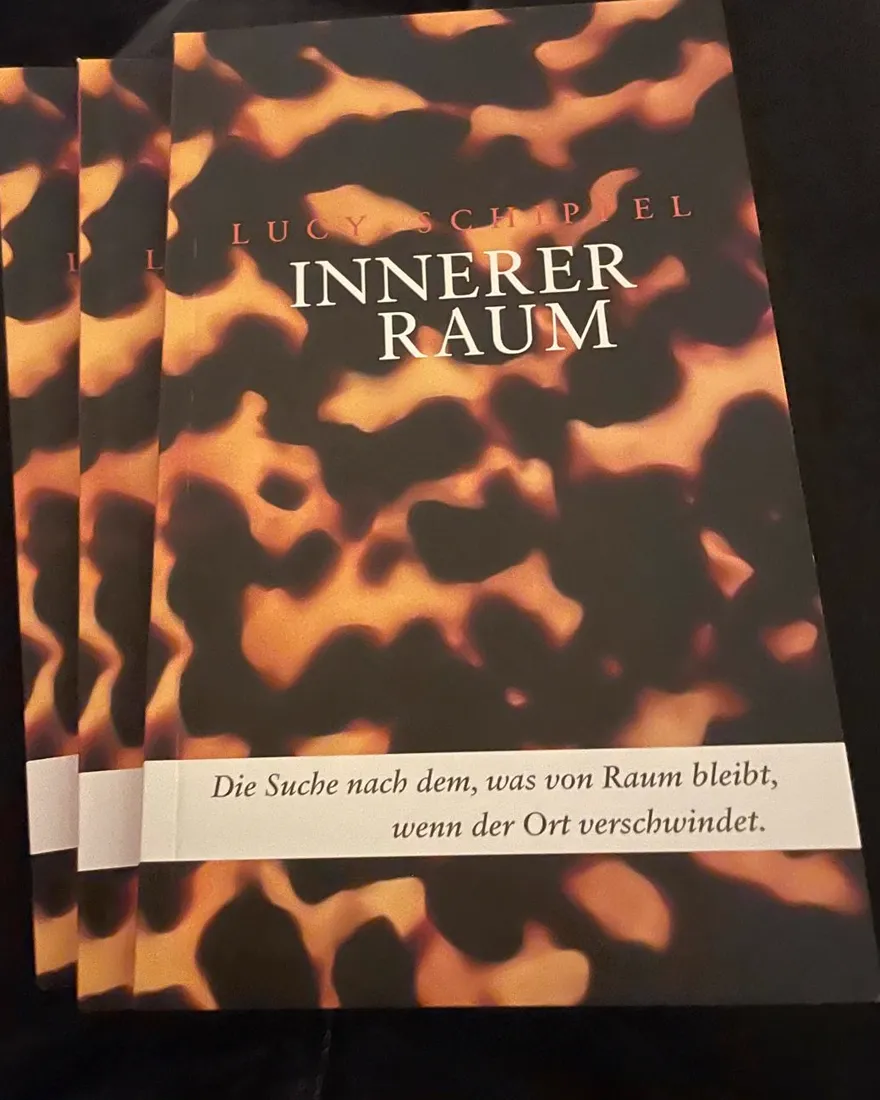 INNERER RAUM · in print
 The book where the method began: an essayistic enquiry into what makes a home a home when the place itself falls away.
Written as the author prepared to move with her family to the other side of the world, INNERER RAUM follows a single research question, “What remains of space, without place?”, and out of it develops the concept of the inner space the whole method rests on.
The method in print: its theory, its scientific grounding and its five phases, laid out as a guide you can work from.
Designed like the book it follows: warm paper, architectural diagrams, room to think. It carries the full derivation (environmental psychology, atmosphere, the inner space), then walks each phase, OBSERVE through TRANSLATE, with the five phase workbooks alongside.
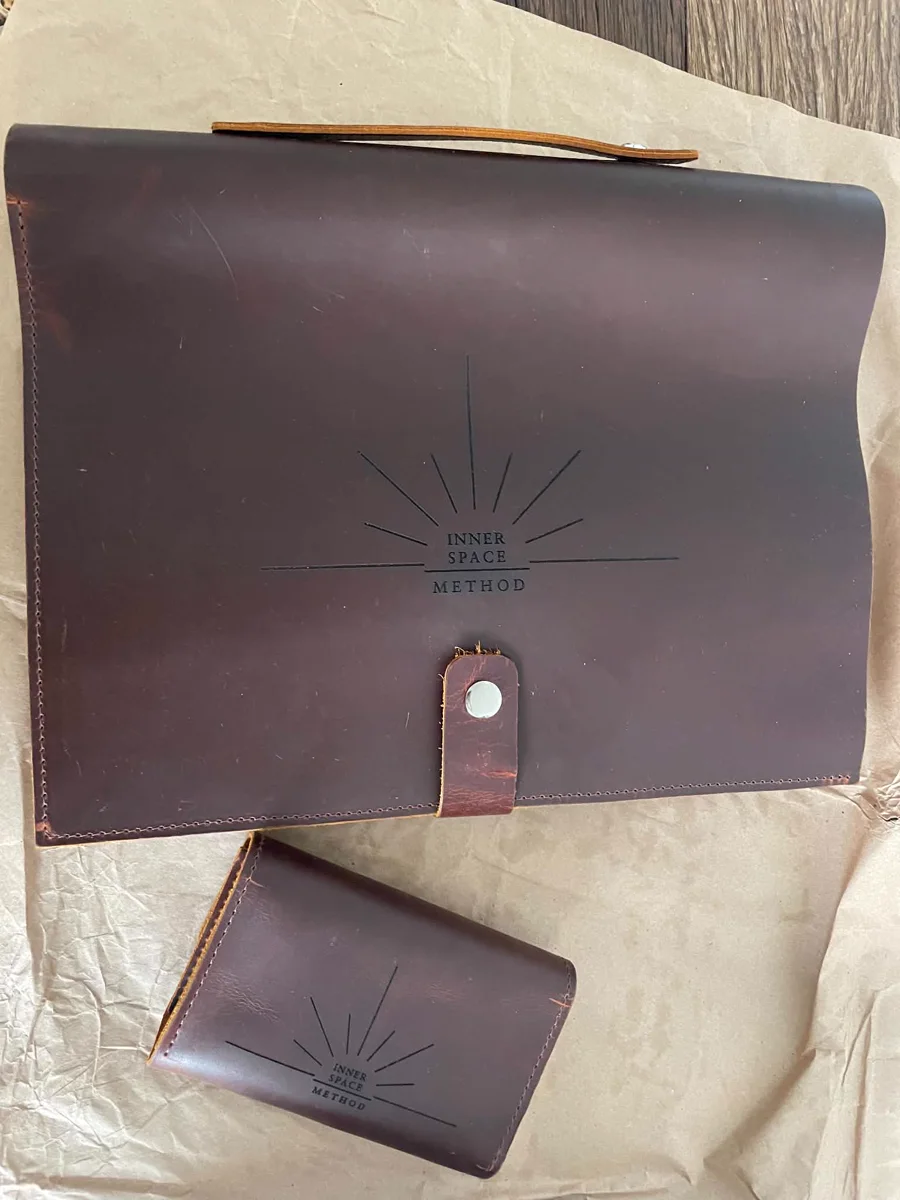
A structured online course for designers: the Inner Space Method taught in full, from its theory to its five phases, with video insight into real application.
For projects, readings, the book, or the course: tell us a little about the home you are trying to make, and we will write back.